



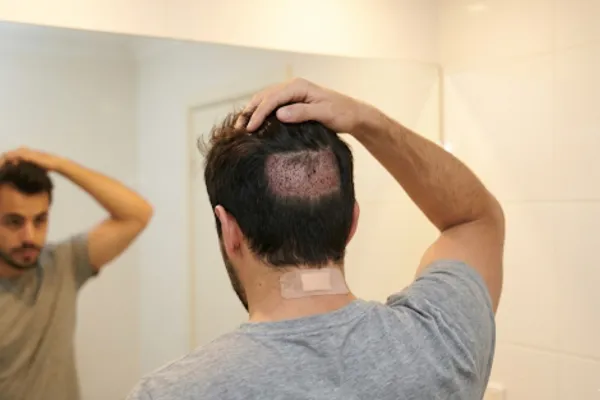
Concerns about scarring are common for anyone considering or recovering from a hair transplant. Many patients worry about whether scars will be visible, how they heal over time, and whether hair can grow in scarred areas.
The reassuring news is that modern hair transplant techniques are designed to minimise visible scarring, and in selected cases, hair can grow on or around scars. This guide explains what scarring is normal, what affects healing, and when treatment options may be considered.
What Is Hair Transplant Scarring?
Any procedure that involves breaking the skin can leave a scar, and hair transplantation is no exception. However, the size, type, and visibility of scars depend on the surgical technique used and how an individual’s skin heals.
Scarring after a hair transplant typically occurs in:
- The donor area, where hair follicles are removed
- Occasionally the recipient area, though this is usually minimal
With modern methods, scars are usually small, discreet, and easy to conceal with surrounding hair.
Types of Hair Transplant Scars
FUE (Follicular Unit Extraction) Scarring
FUE is the most commonly used technique today.
- Leaves tiny dot-like scars in the donor area
- Scars are usually less than 1 mm
- Often difficult to see once healed, even with short hairstyles
Because the scars are spread across the donor area, they tend to blend in well over time.
FUT (Follicular Unit Transplantation) Scarring
FUT involves removing a narrow strip of skin from the donor area.
- Leaves a linear scar at the back of the scalp
- Visibility depends on surgical technique and healing response
- Usually concealed when hair is kept slightly longer
FUT scars can heal well but are more noticeable for people who prefer very short haircuts.
Is Scarring After a Hair Transplant Normal?
Yes, some degree of scarring is normal after any hair transplant procedure. What matters most is whether the scarring heals well and remains cosmetically acceptable.
Normal healing signs include:
- Mild redness that fades over weeks or months
- Subtle texture changes that soften with time
- Gradual blending with surrounding skin
Scars continue to mature and improve for up to 12 months after surgery.
When Does Scarring Become a Concern?
Scarring may need professional review if:
- It becomes increasingly visible over time
- There is uneven thinning in the donor area
- The skin appears raised, thickened, or irregular
- Healing was complicated by infection or inflammation
If you are unsure whether what you’re seeing is normal healing, understanding how to tell whether scarring is part of normal healing or a concern can help clarify when reassurance is enough and when medical advice is appropriate.
Can Hair Grow on Scar Tissue?
This is one of the most common questions patients ask. The answer is sometimes, but not always.
Hair growth on scar tissue depends on:
- Blood supply within the scar
- Thickness and maturity of the scar
- The cause of the scar, such as surgery, injury, or burns
Some scars can support transplanted follicles, while others cannot.
Transplanting Hair Into Scars
In selected cases, hair can be transplanted directly into scar tissue.
This may be considered if:
- The scar is flat and fully healed
- Blood circulation in the area is adequate
- Expectations are realistic
Growth rates in scar tissue are often lower than in normal scalp skin, and density may be reduced compared to standard transplant areas.
Hair Growth Around Scars
Even when hair cannot grow directly within a scar, placing grafts around the scar can help camouflage it effectively. This approach is commonly used to improve cosmetic appearance and blend the area with surrounding hair.
What Affects Scar Healing and Hair Growth?
Several factors influence how scars heal and whether hair growth is possible, including:
- Individual healing response and skin type
- Surgical technique and graft handling
- Donor area management
- Smoking and general health
- Consistency with aftercare
Following proper aftercare steps after a hair transplant plays a key role in reducing visible scarring and supporting healthy healing.
When Should You Speak to a Specialist?
You may benefit from a professional assessment if:
- You are concerned about visible donor or recipient area scarring
- You have an existing scar from injury or previous surgery
- You are considering corrective treatment or camouflage options
- You are unsure whether hair growth on a scar is possible
Clinics like Capilclinic, which regularly work with international patients from the UK and Europe, often assess scar-related concerns and provide personalised guidance based on individual healing patterns and goals.
What Are the Treatment Options for Visible Scarring?
Depending on the situation, options may include:
- Observation, as scars continue to mature over time
- Medical or topical treatments to support skin healing
- Strategic hair placement to camouflage scars
- In selected cases, scar revision or targeted transplantation
Not every scar requires treatment, and not every scar is suitable for further surgery.
Final Thoughts
Hair transplant scarring is a normal part of surgery, but with modern techniques, it is usually minimal and discreet. In some cases, hair can grow on or around scars, helping to improve appearance and confidence.
Because healing and scar quality vary widely between individuals, a personalised assessment is essential. If scarring or hair growth on scars is a concern, professional guidance can help clarify what is realistic and safe.
If you’re unsure about scarring or considering treatment for a scarred area, the medical team at Capilclinic can review your case and guide you through appropriate next steps.
Medical Disclaimer: This article is for informational purposes only and does not replace professional medical advice, diagnosis, or treatment. Scarring and hair growth outcomes vary between individuals. Always seek evaluation from a qualified medical professional before undergoing treatment.